


The Boy Who Cried Wolf
Once, there was a boy who looked after some sheep on a hill. He felt bored and decided to trick the villagers. He shouted, “Wolf! Wolf! The sheep are in danger!” The villagers rushed to help, but there was no wolf. The boy laughed.
The villagers warned him not to lie about wolves. But the boy did it again, shouting “wolf” and fooling the villagers once more. They were angry but left.
Later, a real wolf came. The boy cried for help, but this time, no one believed him. The wolf scattered the sheep, and the boy was sad.

When the villagers came to help, they told the boy that people don’t trust liars, even when they speak the truth. They promised to find the sheep the next day, and they all went home.
Moral
Honesty is important. If you lie too often, people may not believe you, even when you’re telling the truth.
The Miser And His Gold
Once there was a very stingy old man who lived in a house with a garden. He was so miserly that he buried his gold coins under some stones in his garden. Every night, before going to bed, he would go to the stones, dig up the gold, and count it. He did this every day but never spent any of the gold he saved.
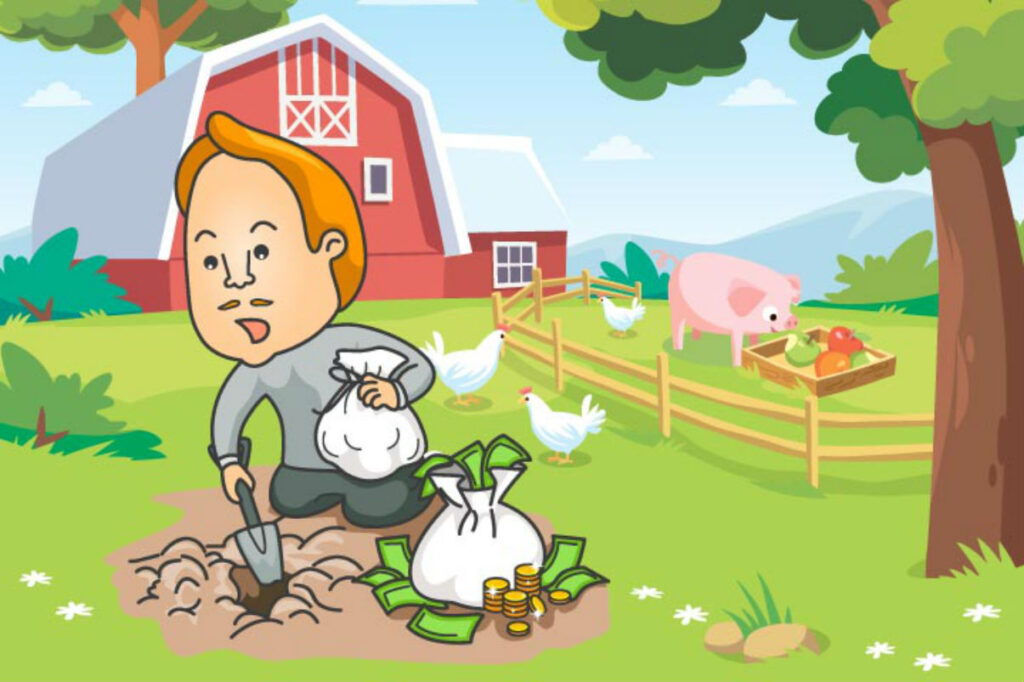
One day, a clever thief learned about the old man’s habit. He waited for the old man to go inside his house, and when it got dark, the thief sneaked into the garden, found the hiding place, and took all the gold.
The next morning, the old miser discovered his treasure was gone and began crying loudly. His neighbor heard his cries and asked what had happened. When the neighbor found out, he wondered, “Why didn’t you keep your money inside your house? It would have been safer and more convenient when you needed it.”
The old miser replied, “I never intended to spend that gold. I just liked having it.”
The neighbor, realizing how foolish this was, tossed a stone into the pit and said, “In that case, you might as well save this stone; it’s as worthless as the gold you lost.”
Moral
Money is meant to be used, not hoarded.
Hoarding wealth without ever using it is as pointless as holding onto something worthless. Money should serve a purpose, and it’s better to invest it wisely or use it for the benefit of yourself.
The Four Students
Once, there were four buddies who despised studying. They loved to party all night and decided to skip an important exam. To dodge it, they spun a tale for the dean. They claimed they’d been to a wedding, had a flat tire on the way back, and had to push the car home without a spare tire. The dean bought their story and postponed the exam.

The friends, realizing they now had to face the test, knuckled down and studied. Exam day arrived, and they were ready. However, the dean separated them into different rooms.
The exam was quite unusual, with only two questions worth a total of 100 marks:
1. Your name:
2. Which tire of the car burst:
a) Front left
b) Front right
c) Rear left
d) Rear right
Moral
Honesty is indeed the best policy and trying to trick others can lead to unexpected consequences. You may be smart, but there are people smarter than you in the world.
The Camel And The Baby
Once upon a time, a mother camel and her little one were having a friendly chat. The baby camel was curious and asked, “Mom, why do we have those big humps on our backs?” The mother replied, “We have humps to store water, my dear. They help us survive in the desert.”
The baby nodded and then asked, “Why do we have round feet, Mom?” The mother explained, “Our rounded feet make it easy to walk comfortably on the soft desert sand. They help us move around.”
The little camel kept questioning, “And why do we have such long eyelashes?” The mother replied, “Our long eyelashes are like shields. They protect our eyes from the gritty desert dust and sand during storms.”

After pondering all of this, the baby camel said, “So, our humps store water, our feet are perfect for walking in the sand, and our eyelashes shield our eyes from desert storms. But then, why are we stuck in a zoo?” The mother camel was left speechless, unable to answer the puzzled little one.
Moral
Your strengths, skills, and knowledge are useless if you are not in the right place.
The Farmer And The Well
Once, a farmer needed water for his crops and decided to buy a well from his sly neighbor. But when he tried to use the well, the neighbor refused, saying, “I sold you the well, not the water.”
Feeling puzzled and frustrated, the farmer turned to Birbal, known for his clever solutions, who served Emperor Akbar. The emperor summoned both the farmer and the neighbor to find out why the well wasn’t being shared.

The neighbor repeated his sneaky argument, “I sold the well, not the water. So he can’t use my water.”
Birbal, with a twinkle in his eye, responded, “You’ve got a point there. But if you’ve sold the water and it’s yours, you better remove your water from his well right now or use it up. Otherwise, that water will belong to the well’s owner.”
Realizing that he couldn’t outsmart Birbal, the neighbor had no choice but to apologize and let the farmer use the well. Thanks to Birbal’s clever thinking, the farmer finally got the water he needed for his crops.
Moral
Being tricky and unfair can backfire, and it’s better to be honest and treat others with fairness and kindness.
The Other Side Of The Wall
Once, there was a young woman who inherited a charming garden from her grandmother. She adored caring for it. One day, she spotted a stunning plant in a catalog and wished to have it in her garden. She ordered it and planted it next to the garden’s stone wall. She nurtured it lovingly, and it thrived with lush green leaves.
Time passed, but the plant refused to bloom. She considered removing it. Then, her neighbor, who had difficulty moving, called to express gratitude. She shared how much joy she found in the flowers from the vine the young woman had planted.
Touched by her neighbor’s words, the young woman rushed to the other side of the wall. To her astonishment, she discovered the most magnificent flower in full bloom. All her care had paid off, but the vine had sneaked through the cracks in the wall, blossoming abundantly on the other side while remaining shy on her side.
Moral
Our actions can bring happiness to others, even when we don’t realize it.
The Price of a Glass of Milk
In a small town, there lived a poor boy who toiled tirelessly, selling newspapers door to door to pay for his education. One day, as he trudged along his route, hunger gnawed at his empty stomach. Desperate, he began asking for nourishment at each house he visited.

Time and time again, the boy’s plea for help was met with refusal until he reached the door of a kind young girl. He requested a simple glass of water, but moved by his impoverished condition, the girl returned with a glass of milk. When the boy offered to pay for the milk, she graciously declined any payment.
Years passed, and the girl grew into a woman. However, she fell seriously ill. Seeking a cure, she consulted numerous doctors, but none could relieve her suffering. In her desperation, she decided to visit the town’s most renowned doctor.
The doctor dedicated months to her treatment, working tirelessly until the woman’s health was restored. Despite her joy at being cured, she worried about the medical bills, fearing they would be beyond her means. However, when the hospital finally handed her the bill, she found a note written on it: “Paid in full, with a glass of milk.”
This heartwarming tale reminds us that acts of kindness and compassion have a way of coming back to us when we least expect it.
Moral
Every act of kindness has its own beautiful reward.
The ants and the grasshopper

“On a radiant autumn day, a diligent family of ants toiled diligently under the warm sun. They were busy drying the grain they had gathered during the summer, ensuring they had enough to last through the winter. It was a season of hard work and preparation.
Amid their work, a hungry grasshopper approached. With his fiddle in hand, he humbly implored the ants for a morsel of food.

The ants, somewhat surprised, asked, “Haven’t you set aside any provisions for the upcoming winter? What occupied your time all summer?”
The grasshopper, with a hint of regret, replied, “I was so engrossed in making music that the entire summer seemed to vanish before my eyes, and I couldn’t collect any food.”
The ants exchanged knowing glances and gently said, “Making music, you say? Very well, then, dance!” With that, they turned back to their work, leaving the grasshopper to ponder his choices.”
Moral
Hard work and preparation in the present can lead to a more secure future. It underscores the importance of balancing leisure with responsibility and not procrastinating when it comes to essential tasks.
Having a Best Friend

The story is about two friends who were walking through the desert. During the journey, they argued over something, and one friend slapped the other. The one who got slapped was hurt by this gesture of his best friend but did not react. He quietly wrote in the sand, “Today my best friend slapped me.”
After some time, they found an oasis and started taking a bath in the lake. Suddenly, the one who had been slapped started drowning. Then his friend came to his rescue and saved him. After he recovered from the drowning, he engraved “Today my best friend saved my life” on a stone.
The friend who had slapped earlier and later saved his best friend asked, “After I slapped you, you wrote in the sand, and now, as I saved you, you write on a stone, why?” The other friend replied, “I wrote in on sand because we should not keep the feeling of getting hurt by someone for a long time. But, when someone does something good for us, we must remember it forever like a message engraved on a stone that nothing can erase”.
Moral
Remember the good things that happen in life, not the bad memories.
The Midas Touch
In ancient Greece, there lived a king named Midas, known far and wide for his extraordinary wealth. His treasure vaults overflowed with shimmering gold, and his palace was adorned with the finest jewels and silks. However, what truly captured his heart was his daughter, a girl of unmatched beauty and grace.
One sunny day, as the birds sang and the roses bloomed in his lavish garden, a rather tipsy satyr named Silenus stumbled into the palace grounds. In Greek mythology, satyrs were believed to bring good luck, and so Midas, acting against the advice of his cautious wife and worried daughter, extended his hospitality to the drunken visitor. Silenus was a dear friend of Dionysus, the merry god of wine and celebration.
When Dionysus learned of Midas’ kind gesture, he decided to reward the generous king. He appeared before Midas and offered to grant him a single wish. Without much thought, Midas blurted out, “I wish that everything I touch turns to gold.”
Though Dionysus had reservations, he granted the wish. Midas, giddy with the newfound power, couldn’t resist testing it. He reached out and touched a simple apple, which instantly transformed into a radiant golden fruit. The palace garden and his subjects’ gifts were soon covered in a shimmering layer of gold.
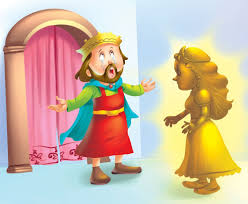
Overcome by the sight of all this wealth, Midas rushed to embrace his beloved daughter. Tragically, the very moment he touched her, she turned into a lifeless, golden statue.
Desperate and heartsick, Midas hurried back to the garden and called upon Dionysus. He begged the god to take away his destructive gift and restore his daughter.
Dionysus, moved by Midas’ despair, revealed a way to reverse the wish. Midas learned a profound lesson about the value of love and family over material wealth. From that day on, he lived contentedly, cherishing his daughter and the simple joys of life.
Moral
The story teaches us that our family and the simple things in life are more important than money. It’s a reminder to value what really matters in our hearts.
The Tortoise and the Birds
Once upon a time in a quiet meadow, there was a tortoise who wished he could be faster. He asked two friendly birds for help, and they agreed to carry him on a stick so he could fly through the sky. As they soared, people below found it funny and laughed. The tortoise couldn’t help himself and opened his mouth to talk, and oops! He fell down.

The story teaches us that it’s important to be happy with who we are and not pretend to be someone else, even if it seems fun. Appreciating ourselves is the key to a happy journey!
Moral
Just be you! Trying to be someone else might make things a bit tricky, but being yourself leads to a happy journey.


