

Controlling Anger
There was a young boy who had a fiery temper. When he got mad, he’d say mean things that hurt others. So, his dad came up with a clever plan. He gave the boy a bag of nails and a hammer and said, “Every time you lose your temper, go hammer a nail into the fence in our backyard.”

In the beginning, the boy was so angry that he pounded a bunch of nails into the fence, almost emptying the bag. But as time passed, he started losing his temper less often. The number of nails going into the fence dropped. Then, one day, he didn’t lose his temper at all. His dad was pleased and said, “Now, start pulling out one nail each day as a sign of your progress.” The boy carefully removed the nails one by one.

When he got to the very last nail, his dad pointed at the fence and said, “You’ve done a fantastic job, my boy. But see those holes in the fence? Even after we repaint it, it won’t be the same. Just like how unkind words in anger can leave lasting scars on someone’s heart and mind.”
Moral
Speaking hurtful words in anger can leave lasting emotional scars on others.
Words spoken in anger can leave deep emotional scars on others, much like nails driven into a fence. It teaches us to control our temper and think before we speak to avoid causing lasting harm to those around us.
Bad Habits
Once, there was a rich man worried about his son’s bad habits. He turned to a wise old man for help. This wise man wanted to teach the boy a lesson.
They went for a walk in the woods. The old man showed the boy a little plant and asked him to pull it out. The boy did it easily.
As they walked further, the old man asked the boy to pull out a bigger plant. The boy had to try a bit harder, but he managed it.

Then, they found a bush. The old man asked the boy to pull it out. The boy had to put in even more effort, but he succeeded.
Next, they found a small tree. The boy struggled a lot, but he finally pulled it out.
Finally, they reached a big tree. No matter how hard the boy tried, he couldn’t move it. He failed after many attempts.
The old man smiled and explained, “Habits, whether they are good or bad, are like those trees. Some are easy to change, while others are really tough, and a few might feel impossible.”
So, the story tells us that breaking bad habits can be hard, just like trying to move a big tree. It reminds us to start with the small habits and work our way up.
Moral
Breaking bad habits can be very tough, just like trying to uproot a big tree. It’s best to start with small habits and work on them gradually.
Good Company and Bad Company
Once upon a time, there were two parrots who made a cozy nest in a big banyan tree. They had two little ones, and they took excellent care of them. Every day, the parent parrots would fly off in the morning to find food and return home in the evening.

But one day, when the parents were away, a cruel hunter snatched the young parrots. One of them managed to escape and flew far away to a peaceful hermitage. Here, it grew up listening to kind words and compassion.
The hunter, however, locked the other parrot in a cage. In the hunter’s home, it learned a few words and phrases, but the hunter and his family were not kind or caring.
One day, a traveler rested near the hunter’s hut. The parrot in the cage, sensing someone outside, angrily squawked, “Hey, you fool! Why are you here? Get lost, or I’ll cut your throat!” The traveler was frightened and quickly left. On his journey, he eventually arrived at the hermitage where the other parrot lived.
The hermitage parrot greeted the traveler warmly, saying, “Welcome, dear traveler. You can stay here as long as you like.”
Surprised, the traveler shared his encounter with the other parrot and how unkind it had been. He asked, “Why are you so kind and the other parrot so mean?”
The hermitage parrot explained, “That must be my brother. I live with the wise hermits, and my brother lives with hunters. I learned the language of the hermits, and my brother learned the language of the hunters. The company we keep shapes who we become.”
This story teaches us that the people we spend time with can influence our behavior and attitudes. So, it’s important to choose our company wisely.
Moral
Keep good company if you want to be a good person.
Our surroundings and the people we associate with have a profound impact on our behavior and character. It reminds us to choose our companions wisely, as they can influence us for better or worse.
The Lesson of Resilience
Asha was feeling overwhelmed by the challenges of life, so she turned to her father for guidance. Her father, a wise man, decided to impart a valuable lesson to his daughter. He instructed her to gather an egg, two tea leaves, and a potato. Then, he set up three pots, filled them with water, and placed them on the stove.
As the water in the pots began to boil, Asha placed each of the items into one of the pots, keeping a close watch. After about 10 minutes, her father instructed her to peel the egg, peel the potato, and strain the leaves. Asha was left puzzled, not understanding the purpose of this exercise.
Her father, with a knowing smile, explained, “My dear, these items were all subjected to the same circumstance—boiling water. Yet, notice how each one responded differently?”
He went on to clarify, “The egg, once soft, has become hard. The potato, which was hard, has turned soft. And the tea leaves, well, they managed to change the water itself.”
With a thoughtful expression, Asha listened as her father concluded, “In the face of adversity, we tend to react much like these items. Now, my dear, ask yourself, are you like the egg, the potato, or the tea leaves?”

This story teaches us about resilience and adapting to life’s challenges, reminding us that our responses to adversity shape who we are.
Moral
We can choose how we respond in difficult situations.
In the face of life’s challenges, our responses define us. We can choose to become hardened like the egg, softened like the potato, or transformative like the tea leaves. It encourages us to be resilient and adaptable when adversity strikes.
The Bundle of Sticks
Once upon a time, in a peaceful village, lived a man with his three hardworking sons. Despite being diligent, his sons constantly argued with each other. The old man tried his best to bring them together, but his efforts were in unsuccessful.
As time passed, the man fell ill. In his weakened state, he summoned his grown sons and made a plan to teach them the value of unity. He said, “I will give each of you a bundle of sticks. Your task is to break them, one by one. The one who finishes first will receive a special reward.”

The sons agreed to the challenge. The father handed them ten sticks each, and they started breaking them individually. Soon enough, they completed the task, but their disagreements continued.
The old man smiled and said, “My dear sons, the real test is yet to come. Now, I will give you another bundle of sticks, but this time, you must break them together as a bundle, not separately.”
The sons accepted the challenge and tried to break the sticks as a bundle. They pushed, pulled, and strained, but no matter how hard they tried, the sticks remained unbroken. Frustrated, they admitted their failure to their father.
With a loving smile, the old man imparted his wisdom, “See, my dear sons, breaking each stick separately was easy for you, but when you tried to break them together, you couldn’t. This shows that unity is your greatest strength. When you are together, no one can harm you. However, if you continue to quarrel, you will be easily defeated.”
The sons realized the truth in their father’s words. They promised to stay united, understanding the power that lies in togetherness.
Moral
When we stick together and work as a team, we are stronger and safer. It’s important to put aside our disagreements and stay united, as it helps us overcome difficulties and challenges.
The Wolf and the Sheep
Once upon a time, there was a wolf who found himself in a terrible condition after a fierce battle with a bear. He was so badly injured that he couldn’t move, and his hunger and thirst tormented him.

One day, a sheep happened to pass by his hiding spot. The wolf, desperate and weak, decided to ask for help. He called out, “Could you please bring me some water? It might give me the strength to find proper food.”
The sheep, hearing this, hesitated and replied, “Proper food? You mean me, right? If I brought you water, I’d end up becoming your meal. So, let’s not talk about fetching drinks.”
Moral
Don’t trust those with harmful intentions, even when they ask for help.
Sometimes, those who have ill intentions will use any excuse to harm others. It reminds us to be cautious when dealing with individuals who have previously shown harmful intentions, as their requests may not always be as they seem.
The Wolf and The Crane
Once upon a time, a wolf was munching on its meal when a tiny bone got stuck in its throat. It caused unbearable pain, and the wolf desperately sought help from every animal it met.
After a long search, the wolf met a kind crane and asked for assistance, promising a reward in return. The crane, being helpful, agreed. It told the wolf to lie down and open its mouth wide.

With great care, the crane reached into the wolf’s throat and skillfully removed the troublesome bone, relieving the wolf’s pain.
The crane, expecting the promised reward, was met with a cunning response from the wolf. Instead of fulfilling its promise, the wolf smiled and said, “Aren’t you happy? You safely put your head into a wolf’s mouth and took it out without harm.
Moral
Kindness and Greed cannot go hand in hand.
One should always keep their promises and show gratitude for the help they receive. It emphasizes the importance of honoring our commitments and not taking advantage of those who lend a helping hand, regardless of their size or status.
The Milkmaid and Her Pail
Patty, a girl carrying a bucket of milk on her way to the market, started thinking about what she’d do with the money she’d make from selling it. She dream of buying quails from Farmer Brown, which would lay eggs every day. She planned to sell those eggs to the parson’s wife, get a new dress and a hat, and look so beautiful that all the young men at the market would want to talk to her.
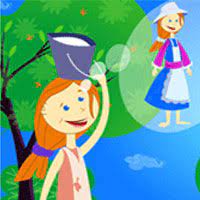
As she imagined this, she tossed her head back in pride, and whoops! The pail of milk fell and spilled everywhere!
Moral
Count your chickens only after they’re hatched.
It’s not wise to count your chickens (or in this case, your eggs) before they hatch. Planning for the future is good, but it’s important to stay focused on the present and not let daydreams lead to careless mistakes.
The Sharp Axe’s Victory
In a serene village, two woodcutters, Mark and Eric, decided to compete in a woodcutting challenge. The winner would receive a bag of freshly baked bread from the village baker.
Mark, known for his determination, began cutting trees non-stop. However, as the day progressed, his pace slowed, and his arms ached.

Eric, on the other hand, started by cutting a few trees but then took a break to sharpen his axe. After the break, he continued cutting effortlessly.
By the end of the day, Eric had gathered significantly more firewood than Mark. He received the bag of freshly baked bread from the village baker as the winner.
Moral
The importance of taking short breaks to stay sharp and efficient can lead to better results in the long run.
The Greedy Lion
Once, on a very hot day, a hungry lion was looking for something to eat. He found a small hare and caught it, but he thought, “This little hare won’t fill my empty stomach.
“Just as the lion was about to eat the hare, a bigger deer hurried by. The lion got greedy and decided, “I should have the large deer instead of this tiny hare.”

So, he let the hare go and quietly pursued the deer, but the deer quickly vanished into the woods. The lion felt sorry for letting the hare escape.
Moral
Greed can lead to missed opportunities and regrets.
Birbal’s Khichdi
On a freezing winter day, Emperor Akbar and his clever advisor, Birbal, strolled by a frigid lake. Akbar dipped his finger into the icy water and shivered, saying, “I don’t believe anyone can endure a night in this chilling water.” He promised 1000 gold coins to anyone who could spend a night standing in the lake.
A humble man stepped forward, braving the freezing water all through the night. When he came to claim his reward, Akbar asked how he had managed.

The man replied, “Your Majesty, I gazed at a distant lamp burning on the palace roof all night, and it kept me warm.”
But Akbar doubted the man’s feat and refused the reward, thinking it was the lamp’s warmth that had helped. The man sought Birbal’s help.
The following day, Birbal didn’t attend the court. When Akbar went to Birbal’s house to inquire, he found a pot of polenta hanging high in the air with a small fire burning below. Akbar was puzzled.

Birbal explained, “If this fire can’t cook the polenta in the pot, just like the lamp’s heat couldn’t warm the man in the lake, then perhaps the reward is deserved.” Akbar realized his mistake and honored his promise by giving the poor man a well-earned reward.
This story teaches us not to jump to conclusions and to keep our promises, even when the solution seems unconventional.
Moral
This story teaches us not to jump to conclusions and to keep our promises, even when the solution seems unconventional.
The Magical Donkey
In a kingdom, there was a precious necklace gifted by King Akbar to his queen. She kept it safe in her room. However, one day, the necklace disappeared, leaving the queen in distress. King Akbar realized that not only the necklace but other valuable items had also gone missing recently.

He turned to Birbal for help. Birbal brought along a magical donkey to solve the mystery. He set up a tent and asked each person to go inside alone and hold the donkey’s tail. The magical donkey had a unique power: it could identify the thief and give them a swift kick.
Everyone agreed to Birbal’s test except for the thief, who was too afraid to touch the donkey’s tail. This way, Birbal used the magical donkey to catch the thief who had stolen the precious items.
Moral
A clever idea always saves the day.


